What is an FRAEW?
An FRAEW is no longer a report that you order. PAS 9980:2026 has turned it into a staged process that we run with you.
Every new service starts with a triage of your building and its walls. If both are inherently low risk, we issue you a Clause 14 report; a factual record that states as such. If they appear higher risk, or we’re unsure based on the level of evidence provided for triage, we’ll undertake a full FRAEW, rating every wall type as low, tolerable, medium or high risk.
Under PAS 9980:2026, your appraisal is explicitly risk-based, which changes the process. Your FRAEW now includes:
- Initial look-only triage of your building, undertaken by competent specialists, to assess whether your building and each of its walls are inherently low risk, based on the documentation that you provide
- A report outlining the triage outcome, detailing our recommendation for your next steps: a Clause 14 report or a full FRAEW
- If triage determines that a full FRAEW is needed, we investigate further, and your FRAEW will conclude with one of four outcomes for each wall: low, tolerable, medium, high
Untangling the new FRAEW process
In September 2026, the Ministry of Housing, Communities and Local Government published updated guidance . Alongside it, BSI republished the underlying technical standard, with PAS 9980:2026 replacing PAS 9980:2022 as the code of practice assessors must follow, which BSI describes as a clarification of the methodology.
Covering when an FRAEW may be needed, how to commission one, what a good report looks like and how findings feed into wider fire safety management, these two publications remove the claim that the guidance is too thin to justify acting on.
For any acronym, I think the best way is to refer to it in full once on the page, and then the acronym is ok from there. I think that FRAEWs happen to be a recognised term in the industry on this occasion too.
Time is running out on unsafe cladding
-
46%of identified clad buildings have not started remediation
-
12months to assess after the Remediation Bill receives Royal Assent
-
£500,000maximum penalty for failing to remediate
-
929buildings are already facing enforcement
Your FRAEW with Ark Workplace Risk

PAS 9980 experts
Work with competent specialists experts on the new code.

Defensible, audit-ready outcome
FRAEW reports that use the 2026 code and stands up to Homes England scrutiny

Only pay for what you need
We only commission a full FRAEW if you actually need one

Get ahead of the 12-month deadline
Get assessed early, with time to plan, fund and fix before the Remediation Bill’s assessment window closes.

Avoid unnecessary remediation
Evidence that you have taken all reasonable steps with Building Safety Act specialists.

Avoid personal liability
Prove that you have taken all reasonable steps to avoid large fines of up to £500,000.

Protect asset value
Answer buyer, lender and insurer questions with independent, risk-based evidence on your walls.
Download your free guide to PAS 9980:2026
“Ark is clearly at the forefront of supporting clients in navigating the legislative landscape. Their partnership ensures we always have access to the latest guidance and best-in-class support. Ark brings independent insight we can rely on and are not afraid to tell us what we need to hear.”
Why work with Ark Workplace Risk?
- Over 30 years advising on risk, safety and compliance in the built environment
- An in-house team of multi-disciplinary experts covering health and safety, fire, structural and regulatory requirements.
- A dedicated, fully COSH-qualified Customer Success team
- An industry-leading NPS of 61 vs average of 35
- A competent partner protecting over 200 UK clients and more than 9,000 buildings
- Multi-award-winning in both professional services and technology
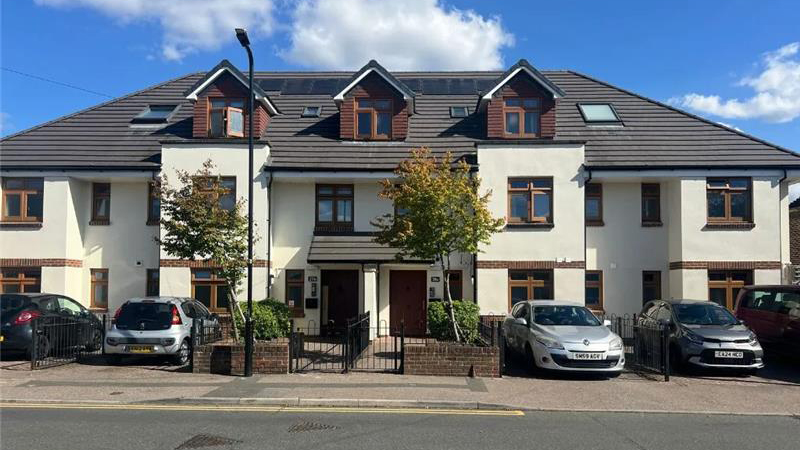
Liaise
Transforming compliance & risk culture at Liaise.
FRAEW frequently asked questions
An FRAEW is a specialist appraisal of a building’s external walls. It assesses the risk of fire spreading via the walls and rates each wall type as low, tolerable, medium or high. It’s usually triggered by a recommendation in your fire risk assessment (FRA), and its findings feed back into the FRA.
The new PAS 9980:2026 code has updated the FRAEW process to include an initial triage stage. It is this triage that determines whether your building needs a Clause 14 report or a full FRAEW (Clause 15 report). A Clause 14 report is only possible if the building and all of its walls are inherently low risk.
Where information is missing, the assessor must assume the worst case. That makes it more likely your building will be routed to a full FRAEW, possibly with opening up.
Usually, yes. A new appraisal is normally needed when the external walls have changed, for example through façade alterations, over-cladding, balcony replacement or insulation upgrades, or when a later FRA recommends one.
Yes, an FRAEW completed since May 2022 under the old PAS 9980:2022 code need not be repeated if it met the requirements of the time, and as long as it can withstand scrutiny.
Before commissioning an FRAEW, it is important that you gather comprehensive historical and technical documentation to help the assessor. This includes, but is not limited to:
- Your Fire Risk Assessment report and any other Fire Strategy reports
- Evacuation plans
- Photos of every elevation in the building
- Construction and ‘as-built’ drawings
Remember, the more information and documentation you can provide at triage, the more likely you are to avoid unnecessary costs, as an inconclusive report will necessitate a full FRAEW.
Book a consultation to get expert advice
Ark Workplace Risk’s façade, fire engineers, and chartered surveyors carry out FRAEWs to PAS 9980:2026, tailored for residential and commercial portfolios. Speak to the team to see how we can guide you through this new process, from initial triage to clear, defensible recommendations.